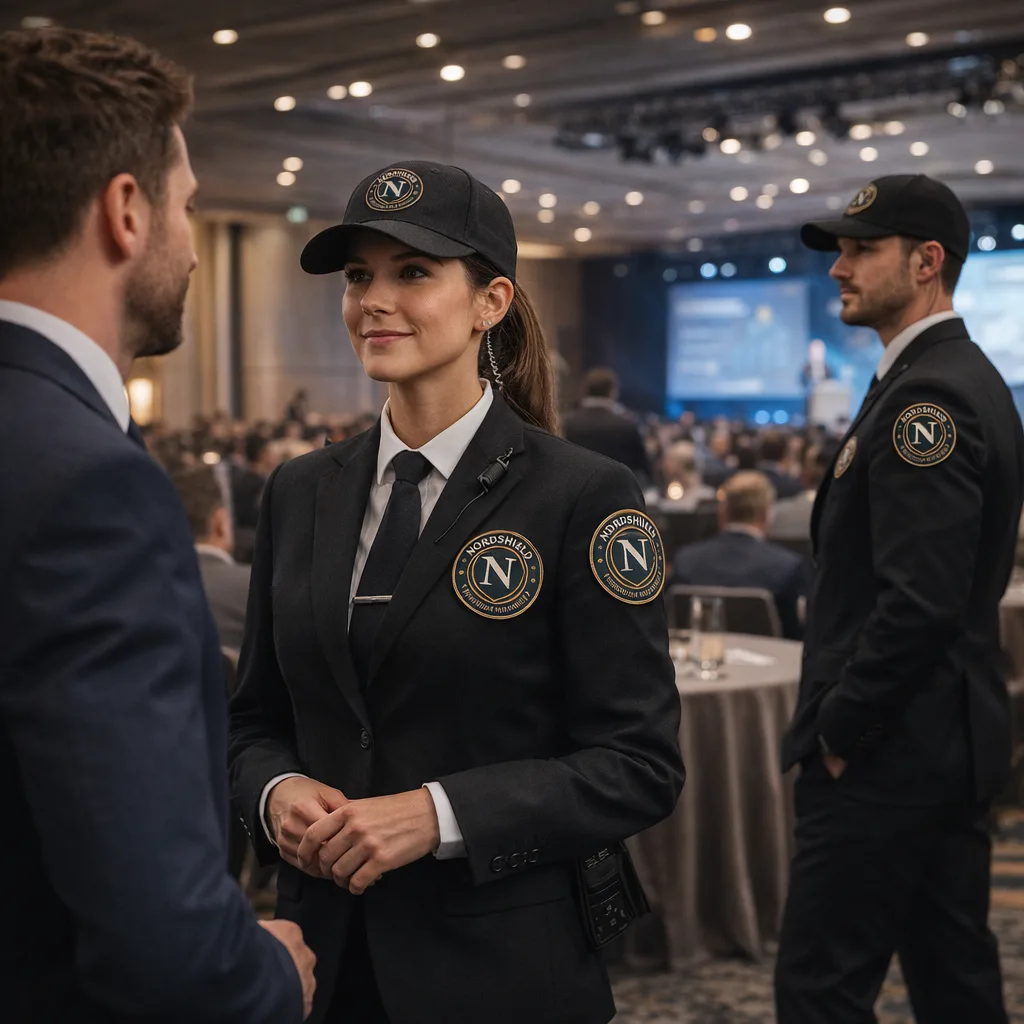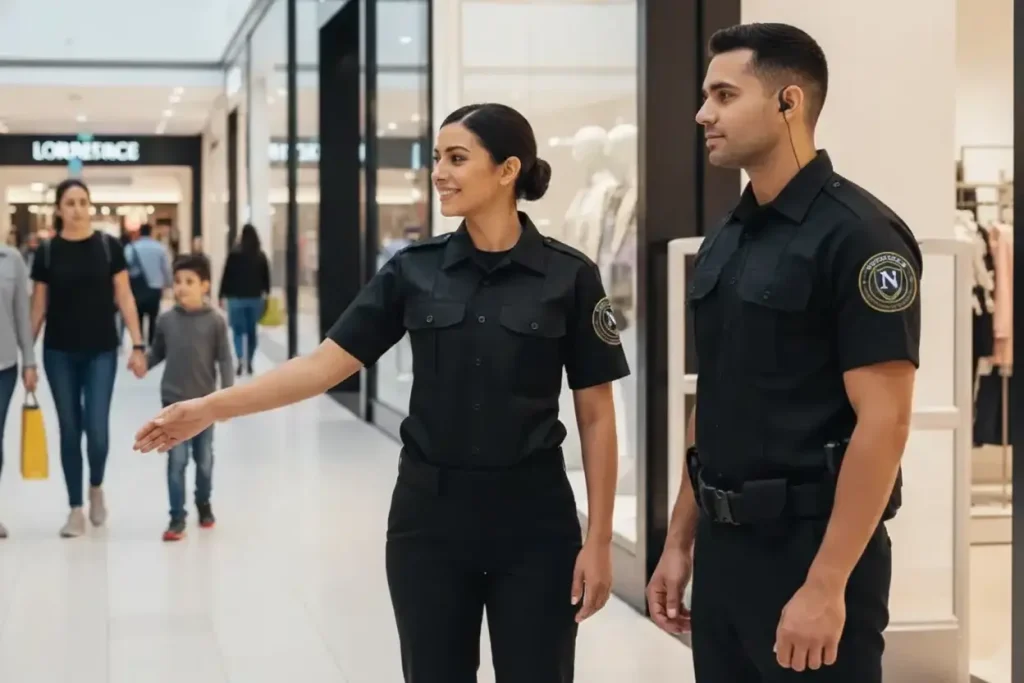
Picture this. Your company spent six months planning the biggest corporate gala of the year. The venue is stunning, the guest list is impressive, and the catering is world-class. Then, three hours into the event, an uninvited guest walks through an unsecured side entrance, a verbal dispute breaks out near the bar, and your entire event team freezes because nobody has a plan for what to do next.
This is not a worst-case fantasy. It happens at corporate events across Ontario every year, and it almost always comes down to one thing: security was never properly planned.
A strong corporate event security checklist does not just protect your guests. It protects your company’s reputation, limits your legal liability, and gives your entire team the confidence to run a smooth, professional event from start to finish. At NordShield Security, we have supported corporate events of all sizes across Ontario, and we built this guide to give event planners and business owners a clear, actionable roadmap for planning event security the right way.
Whether you are organising a 50-person executive dinner or a 500-person annual general meeting, this event security planning guide covers every step you need to take before your guests walk through the door.
Why corporate event security planning cannot be an afterthought
Most event budgets have a line for catering, audiovisual equipment, and venue rental. Security often gets squeezed into whatever is left over, or gets skipped entirely with the assumption that “nothing will go wrong.”
That assumption is expensive. According to the Canadian Centre for Justice Statistics, assault and disturbance incidents at private events and venues account for a significant portion of reported property and personal safety incidents in urban Ontario. Beyond physical incidents, poor corporate event security planning exposes your organisation to liability claims, reputational damage, and insurance complications that can follow a business for years.
Corporate event safety planning is not about expecting the worst. It is about removing the conditions that allow problems to develop in the first place.
What happens when event security is not planned properly
When security is improvised, gaps appear everywhere. Entry points go unmonitored. Vendors arrive without verification. Guests who should not have access to restricted areas move freely through the venue. Incidents that trained security personnel would handle in under two minutes stretch into chaotic situations that disrupt the entire event.
The financial and reputational cost of a single poorly managed incident can exceed the entire annual budget of a professional corporate event security services contract. The event security best practices in this checklist exist to make sure that cost never lands on your desk.
How far in advance should you plan corporate event security?
For events with under 100 guests, begin your corporate event safety planning at least four to six weeks before the event date. For events between 100 and 500 guests, start eight to twelve weeks out. For large-scale events above 500 attendees, your event security planning checklist should begin three to four months in advance. Booking a licensed security provider late limits your options and reduces the quality of planning that goes into your event.
Step 1: Conduct a corporate event risk assessment before anything else
Before you book a single security guard or set up a single checkpoint, you need to understand what you are actually protecting against. A corporate event risk assessment identifies the specific vulnerabilities in your event setup and gives your security team a clear picture of where to focus their resources.
NordShield Security conducts a pre-event security audit for every corporate event we work on. This audit shapes every decision that follows, from staffing numbers to technology placement to emergency protocols.
What a proper event security risk assessment covers
A thorough event security threat assessment reviews the following areas in detail. It examines the venue layout and identifies every entry and exit point, including service entrances and emergency exits that guests might use as informal entry points. It evaluates the guest profile, whether your attendees are internal staff, public guests, VIP executives, or a mix of all three. It reviews the event schedule and identifies high-risk windows, such as alcohol service periods, high-profile speaker appearances, or late-night portions of the program. It also assesses the surrounding environment, including parking areas, nearby public access points, and any protest or demonstration risk for politically sensitive organisations.
The output of a proper event security vulnerability assessment is a written risk register that your security provider uses to design the staffing plan, communication protocols, and emergency response procedures for the event.
High-risk vs. low-risk corporate events: how do they differ?
Not every corporate event carries the same risk profile. A private board dinner for twelve executives in a secured private dining room carries very different risks compared to a 400-person product launch open to media, influencers, and members of the public. Large event security management requires significantly more layering of personnel, technology, and procedures.
Events involving executives, public figures, or controversial topics may also require executive protection planning, where a dedicated security officer shadows specific individuals throughout the event. NordShield Security evaluates each event individually rather than applying a generic template, because event safety risk management only works when it reflects the real conditions of the event.
Venue walkthrough and floor plan security review checklist
A venue walkthrough security visit should happen at least two to three weeks before your event. During this visit, your security provider reviews the event floor plan in detail, maps every entry and exit point, identifies camera blind spots, assesses lighting levels in parking areas and corridors, and confirms the location of fire exits, first aid stations, and electrical panels. This venue entry and exit mapping becomes the foundation for your entire access control and patrol plan.
Step 2: Plan your event security staffing and team structure
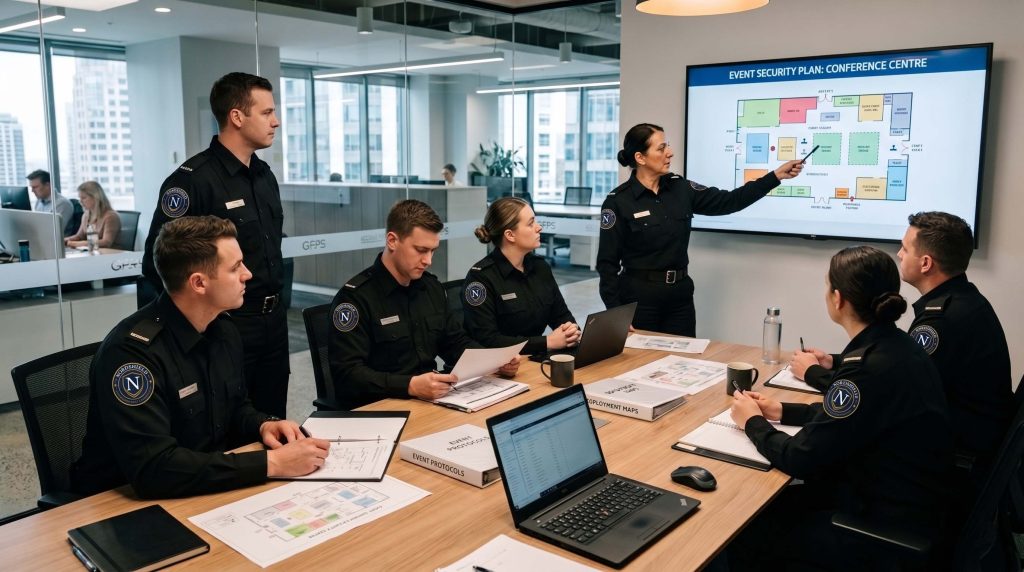
Once your risk assessment is complete, you have the information you need to build your security guard staffing plan. This is where most event organisers make their first serious mistake: they understaff, often because they underestimate how many people a single guard can effectively monitor at one time.
How many security guards do you need for a corporate event?
The standard event security guard to attendee ratio varies based on event type, alcohol service, and risk level. For low-risk corporate events such as daytime conferences or seated dinners without alcohol service, one security officer per 75 to 100 guests is a reasonable starting point. For events with alcohol service, entertainment, or open public access, that ratio tightens to one officer per 50 guests. For large-scale or high-profile events, staffing levels increase further to account for dedicated entry screening, VIP escort, perimeter patrol, and monitoring station coverage.
Security guard staffing for corporate events should also account for shift overlap during venue changeover, break coverage, and a designated security supervisor who manages the team and communicates directly with your event coordinator.
Uniformed officers, plainclothes guards, and security supervisors – which does your event need?
The composition of your security team matters as much as its size. Uniformed security officers events provide visible deterrence and give guests a clear point of contact in an emergency. Plainclothes security officers at events blend into the crowd and monitor for behavioural indicators that uniformed staff might miss, such as intoxicated guests, suspicious individuals, or people attempting to access restricted areas without credentials. A security supervisor on-site manages the team, handles escalations, and coordinates with venue management and emergency services if an incident develops.
NordShield Security builds event security teams with all three roles in proportion to the event’s specific risk profile.
Why only PSISA-licensed security guards are acceptable for Ontario events
Every security guard working at a corporate event in Ontario must hold a valid licence under the Private Security and Investigative Services Act (PSISA). This is not optional guidance. It is a legal requirement. PSISA-certified event security guards have completed standardised training in use-of-force guidelines, emergency response, first aid, and human rights compliance. Hiring unlicensed guards, even through a third-party event staffing agency, exposes your organisation to direct liability if an incident occurs.
NordShield Security employs only licensed security guards for Ontario events, and we provide proof of credentials on request before any officer takes a post. When you book event security services in the GTA or anywhere across Ontario, always verify PSISA licensing as a non-negotiable condition of the contract.
Step 3: Set up access control and crowd management for your venue
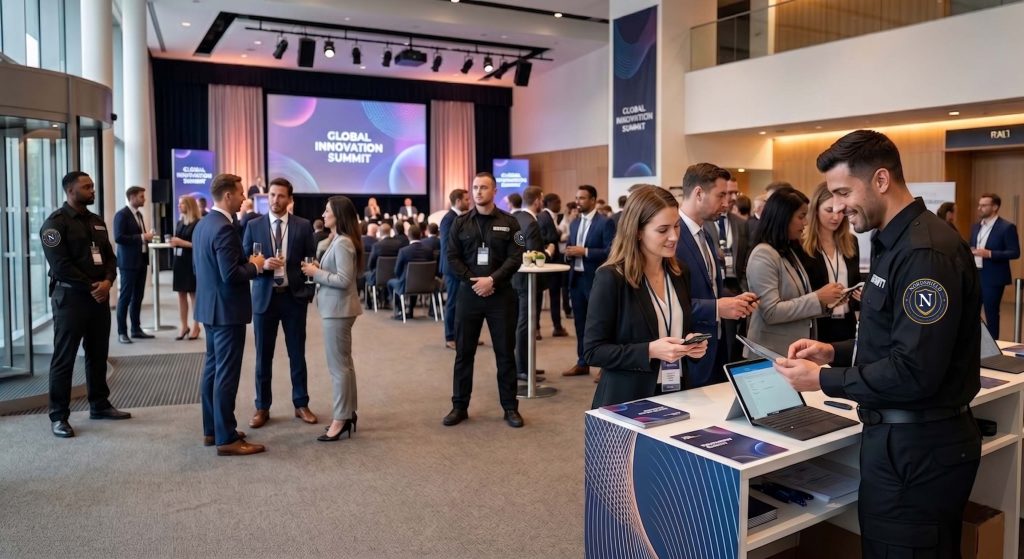
With your risk assessment complete and your staffing plan confirmed, the next phase of your event security planning checklist focuses on access control. Controlling who enters your venue, which areas they can access, and how that access is monitored is the single most effective way to prevent incidents before they start.
Badge and credential systems for corporate event guest screening
A formal event badge and credential system creates a physical record of who is authorised to be at your event and at what level. Standard guest badges confirm event registration. Vendor and contractor credentials restrict access to work areas only. VIP or executive credentials open additional zones. Guest screening at corporate events works best when it begins at pre-registration rather than at the door. Sending registered guests their credentials in advance and using digital check-in at entry reduces queuing time and removes the pressure that encourages staff to wave people through without proper verification.
Entry screening procedures, checkpoints, and bag check setup
Your entry screening procedures should match your event’s risk level. For lower-risk events, a visual credential check at the main entrance with a secondary security officer monitoring the door is sufficient. For higher-risk events, walk-through metal detectors at the event entry point, combined with a bag check security station, add a meaningful layer of protection for guests and the organisation alike. Event security checkpoint placement should direct all guests through a single controlled flow rather than allowing multiple unmonitored entry points to stay open simultaneously.
Managing crowd flow, VIP areas, and restricted zones
Crowd flow management at your venue starts with the floor plan review your security team completed during the venue walkthrough. Every event has natural bottlenecks, entry queues, bar areas, and registration desks, where crowds concentrate and tension can build quickly. Your security team positions officers at these points specifically to manage flow, prevent overcrowding, and maintain a calm, orderly environment.
VIP security at corporate events requires a separate access layer entirely. VIP guests should enter through a dedicated entrance, move through the venue on a separate route where possible, and have a designated security officer who knows their face and their schedule. Event crowd control barriers placed at the boundary of VIP zones create a physical separation that removes ambiguity about who belongs in restricted areas and who does not. Clear, professional boundary management prevents confrontations before they happen.
Step 4: Coordinate with your venue and event vendors on security
Your security team does not operate in isolation. Every vendor present at your event, from catering crews and audiovisual technicians to florists and cleaning staff, represents a potential access control gap if their credentials and movements are not managed properly. Venue security coordination between your security provider and your event management team closes these gaps before the event day arrives.
NordShield Security includes vendor coordination as a standard part of every corporate event security planning engagement. We work directly with your venue contact and your event manager to create a single, unified access and credentialing plan that covers every person on-site, not just your guests.
How to vet and screen catering staff, AV crews, and contractors
Event vendor security vetting starts with a simple principle: anyone who accesses your venue before, during, or after your event should be identifiable and authorised. Catering staff security screening should include a confirmed employee list from the catering company, with names provided to your security team at least 48 hours before the event. AV crew access at your event should be limited to the technical areas relevant to their work and to the specific hours they need access.
Your security contract with your event organiser should specify that all third-party vendors submit a verified staff list and that any unannounced substitution on the day requires on-site supervisor approval before access is granted. This simple protocol eliminates one of the most common and overlooked access control vulnerabilities at corporate events.
Parking area security and arrival lane management
Event parking security planning is an area that most event checklists miss entirely. Your parking area is the first and last touchpoint of your guest’s experience, and it is also one of the most vulnerable. Vehicle access should be managed at a designated entry lane with a security officer present during peak arrival and departure windows. Guests with special access or VIP status should have a separate designated parking zone to prevent congestion at the main entrance.
Late-night event security concerns intensify in parking areas, particularly after events with alcohol service. A security officer stationed in the parking area during the final hour of your event and for 30 minutes after official close time significantly reduces the risk of vehicle incidents, confrontations in the lot, and impaired driving departures that create liability for your organisation.
Step 5: Build your emergency response plan before the event date
Every corporate event security checklist must include a fully documented emergency response plan. This is not a formality. It is the document your security team, your venue manager, and your event coordinator rely on when something goes wrong and there is no time to think through a response from scratch.
A proper emergency response plan for a corporate event defines exactly what happens in each foreseeable emergency scenario, who takes each action, in what order, and how communication flows between all parties involved. NordShield Security develops site-specific emergency response plans for every event we secure, and we review them with the client and venue before the event date.
What a corporate event emergency response plan must include
Your emergency response plan should address every realistic scenario your event might face. It must define the chain of command clearly, specifying who leads the response, who communicates with emergency services, and who manages guest communication. It should include the direct contact information for the nearest hospital, fire station, and police division as well as your security provider’s after-hours escalation line. The plan should also specify the designated assembly point for guests in the event of an evacuation and how guests will be directed to that point quickly and safely.
What should a corporate event security plan include beyond the basics? It should also cover the specific communication language your team uses with guests during an emergency. Clear, calm, authoritative language from trained security personnel prevents panic. Vague or hesitant communication creates it.
Medical emergency, fire, and active disturbance – having a plan for each
Three scenarios account for the overwhelming majority of emergency incidents at corporate events: medical emergencies, fire or smoke incidents, and active disturbances between guests. Each requires a different response sequence, and your event security team should know all three without needing to refer to a document.
For medical emergencies, the response sequence is secure the area around the patient, call emergency services immediately, direct a trained officer or first aid certified staff member to the patient, and designate a second officer to meet paramedics at the building entrance to guide them directly to the scene. Event security insurance liability is also relevant here. A documented, professional medical response with a licensed security provider on-site demonstrates that your organisation exercised its duty of care, which matters significantly in any post-incident legal review.
Security communication plan and radio protocols for your team
Your event security communication plan determines how quickly your team responds when an incident develops. Every officer on your team should carry a two-way radio and operate on a designated channel monitored by the security supervisor throughout the event. Establish simple, unambiguous radio protocols before the event starts. Codes for medical emergencies, disturbances, and evacuation should be agreed upon in the pre-event team briefing so that communication during an incident is fast, clear, and does not alarm nearby guests unnecessarily. Two-way radio security team protocols at corporate events are a basic operational standard, and any provider that does not build this into their service plan is cutting corners your event cannot afford.
Step 6: Day-of event security protocols – the complete checklist
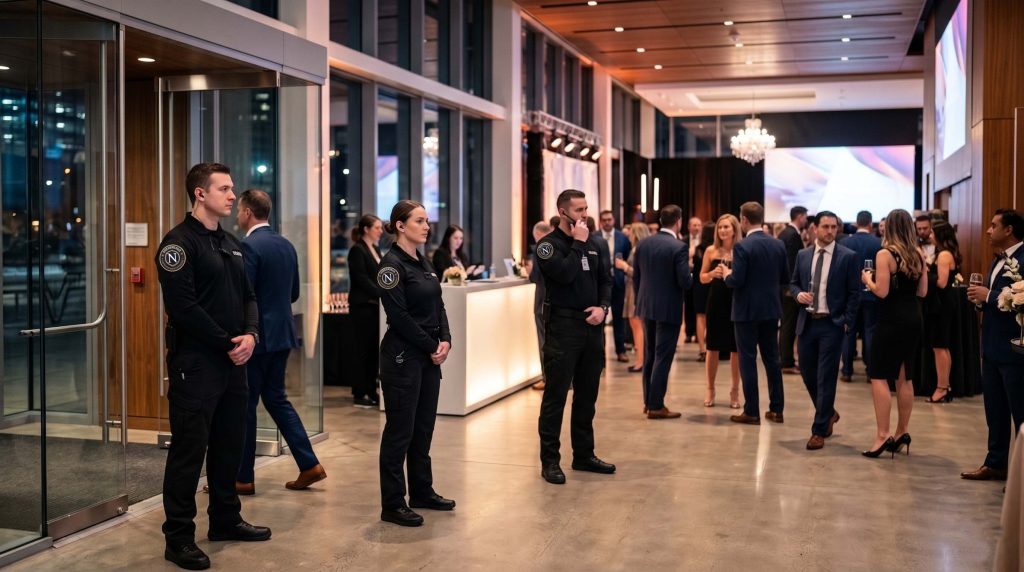
Your planning is complete. Your team is confirmed. Your emergency response plan is documented. Now comes the day of the event, and how your security team executes in the first 30 minutes sets the tone for everything that follows.
Pre-event security team briefing – what to cover in the first 30 minutes
A proper event security team briefing happens on-site, at least 60 to 90 minutes before your first guest arrives. The security supervisor leads the briefing and covers the following points with every officer present. The venue layout and each officer’s assigned post. The guest and vendor credentialing system and how to handle an unverified individual. The radio channel, emergency codes, and escalation chain. The specific high-risk areas or individuals identified in the risk assessment. The emergency response plan, including assembly point location and evacuation routes.
How to brief security guards before an event should not be left to improvisation on the day. NordShield Security prepares a written briefing document for every event that each officer signs before taking their post. This creates accountability and ensures every team member operates from the same information.
What event security officers monitor and manage during the event
Once your event begins, your security team moves from preparation mode into active management. Officers at entry points continue credential verification and monitor for late arrivals attempting to bypass the check-in process. Officers on roving patrol cover crowd areas, bar service zones, and parking access points on a regular rotation. The security supervisor monitors the overall environment, reviews camera feeds if a monitoring station is set up, and maintains radio contact with all posted officers throughout the event.
Alcohol management is one of the most important ongoing responsibilities during the event itself. Trained security officers recognise early behavioural signs of intoxication and intervene quietly and professionally before a situation escalates. This protects your guests, your venue relationship, and your organisation’s reputation in equal measure.
Post-event security debrief and incident reporting
When your last guest leaves, your security team’s job is not finished. A post-event security debrief between your security supervisor and your event coordinator reviews every incident, observation, and near-miss from the event. Any incident that required intervention should be documented in a written incident report that your organisation retains on file. This documentation serves two purposes: it gives you a record for any insurance or legal matter that may arise in the days following the event, and it gives you the information you need to refine your corporate event security checklist for the next event.
Frequently asked questions about corporate event security planning
What should a corporate event security plan include?
A complete corporate event security plan includes a pre-event risk assessment, a venue walkthrough report, a staffing plan with guard-to-attendee ratios, an access control and credentialing system, a vendor screening protocol, a formal emergency response plan with scenario-specific procedures, and a day-of briefing and communication plan. Each element builds on the previous one. Skipping any part of the sequence creates gaps that surface under pressure.
Do corporate events in Ontario require licensed security guards?
Yes. Under Ontario’s Private Security and Investigative Services Act, all security guards working at any event or venue in the province must hold a valid PSISA licence. This applies regardless of event size or format. Organisations that hire unlicensed security personnel, directly or through a staffing agency, assume full liability for any incident that occurs. Always request proof of PSISA certification before confirming any security booking.
What equipment do event security guards use at corporate events?
Standard event security equipment includes two-way radios for team communication, handheld metal detection wands for entry screening at higher-risk events, body cameras for incident documentation, and first aid kits at each security post. For larger events, walk-through metal detectors at entry points and a dedicated camera monitoring station add additional coverage layers. NordShield Security recommends an equipment list tailored to each event’s specific size and risk profile.
How do I screen vendors and contractors before a corporate event?
Request a confirmed employee list from every vendor company at least 48 hours before the event. Share that list with your security team. Brief your entry screening officers to check vendor credentials against the approved list on arrival. Any individual not on the confirmed list should wait at the entry point while a supervisor verifies their authorisation with the relevant vendor company before granting access.
How is an event security risk assessment conducted?
A professional pre-event security audit involves an on-site venue visit, a review of the event schedule and guest profile, identification of every entry and exit point, assessment of lighting and camera coverage gaps, and a written risk register that prioritises vulnerabilities by likelihood and potential impact. NordShield Security conducts this assessment as a standard part of every corporate event security engagement across Ontario.
Ready to build your corporate event security plan with NordShield Security?
A strong corporate event security checklist is the difference between an event that runs smoothly from the first guest arrival to the last car leaving the parking lot, and an event that your team spends the next month managing the fallout from.
You now have every step of the planning process in front of you. The risk assessment comes first. The staffing plan follows. Access control, vendor coordination, and your emergency response plan come next. And your day-of protocols bring everything together when it counts most.
NordShield Security provides professional corporate event security services across Ontario. Our PSISA-licensed officers, experienced supervisors, and structured planning process give your event the protection it deserves and gives you the confidence to focus on running a successful event. Contact NordShield Security today to schedule your corporate event security consultation and get a customised security plan built specifically for your event.
Get in Touch
- 416-771-2471
- info@nordshield.ca
- 27-2355 Derry Rd. E Mississauga, ON L5S-1V6