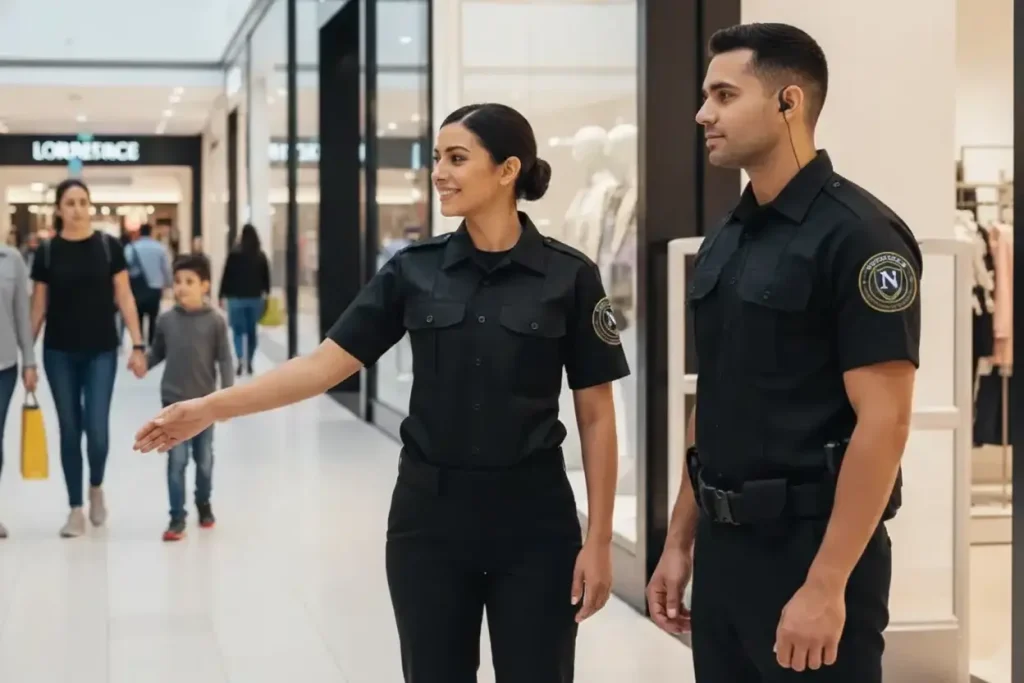
Your condominium building has 200 residents. Every single one of them trusts that they are safe when they walk through the front door, park their car, or collect a package from the lobby. That trust is not given freely. It is earned, maintained, and protected every single day through professional condominium security services.
Yet many condo buildings across Ontario still rely on outdated systems, untrained staff, or no formal security plan at all. The result? Unauthorized entries, package thefts, parking garage incidents, and resident complaints that pile up on the property manager’s desk.
This guide covers everything you need to know about condominium security in Ontario. From the types of services available and the technology that powers them, to the provincial regulations your condo board must follow, this is the resource you need to make the right security decision for your building.
At NordShield Security, we work with condo corporations, property managers, and building owners across Ontario every day. We have put together this guide to help you understand your options and build a safer, more secure community.
What Are Condominium Security Services – And Why Does Your Building Need Them?
Condominium security services cover the full range of people, systems, and processes that protect a residential building and the people who live in it. This includes licensed security guards, access control systems, surveillance cameras, visitor management, and emergency response planning.
Residential building security is not the same as commercial security. In a condo, you are protecting people’s homes. Residents expect to feel safe in shared spaces like lobbies, elevators, parking garages, and amenity rooms. Property management security is part of daily operations, not just a response to incidents.
Without a formal security plan, buildings become easy targets. And the cost of a single serious incident, whether a break-in, an assault in a parking garage, or repeated vandalism, far outweighs the cost of professional security services.
The Difference Between a Secure Building and a Vulnerable One
A secure building has controlled entry points, trained personnel on-site, working surveillance coverage, and a clear process for handling incidents. A vulnerable building has unlocked side doors, a front desk that goes unstaffed after 6 PM, and cameras with blind spots in the parking area.
The gap between the two is not always a large budget. It is often a plan. Tailgating and unauthorized entry in condos remain among the most common security failures, and they cost nothing to fix with the right access control system and trained staff. Break-in prevention in a condo starts with removing the easy opportunities that bad actors look for.
Resident safety concerns rise sharply when people feel that management is not taking security seriously. And when residents feel unsafe, they move out.
High-Rise, Low-Rise, and Townhouse Complexes – Does Building Type Change Your Security Needs?
Yes, significantly. High-rise condo security focuses on vertical access control, elevator management, and lobby screening since hundreds of residents share a single entry point. Low-rise condominium security often involves more perimeter coverage and parking area monitoring. Townhouse complex security deals with distributed entry points, street-level access, and individual unit adjacency.
Multi-unit residential security is never one-size-fits-all. The right security plan starts with understanding the specific layout, resident profile, and risk level of your building.
Common Security Threats Facing Condominium Buildings in Ontario
Before you can fix a security problem, you need to understand what you are actually dealing with. Ontario condo buildings face a consistent set of threats that repeat across the province, regardless of city or neighbourhood.
Package theft in apartment buildings has increased sharply since 2020, driven by the rise of online shopping. Vandalism in condominium common areas, from graffiti to broken fixtures, costs condo corporations thousands of dollars each year in repairs. Parking garage theft in condos remains a top complaint among residents in urban buildings.
These are not random events. They follow patterns. And understanding those patterns is the first step toward stopping them.
Tailgating and Unauthorized Access in Shared Entry Buildings
Tailgating, where an unauthorized person follows a resident through a secured door, is the most common form of unauthorized entry in condos. It happens because people are polite. They hold doors open. They do not want to seem rude.
The solution is not to make residents less polite. The solution is to design entry systems that make tailgating physically difficult and to have trained security personnel who monitor entry points and respond to after-hours incidents before they escalate. A single security officer stationed at the main lobby during peak hours can reduce tailgating incidents by more than 70 percent according to industry data from the Canadian Security Association.
Blind Spots in Surveillance, Parking Lot Theft, and Common Area Vandalism
A CCTV surveillance system is only useful if it actually covers the areas where incidents happen. Many buildings install cameras at the main entrance and assume coverage is complete. Meanwhile, the parking garage, stairwells, and back exits remain blind spots in the surveillance network.
Parking garage theft in condos accounts for a large portion of property crime in Ontario residential buildings. Vehicles are broken into, bicycles are stolen from storage rooms, and catalytic converters are targeted in underground lots. Proper camera placement, combined with motion sensor lighting throughout the garage, removes the cover that thieves rely on.
Vandalism in common areas follows a similar pattern. When areas look unsupervised, they attract misuse. Visible security measures change behaviour before an incident ever occurs.
Domestic Disturbances and Trespassing – Incidents Property Managers Face Most
Property managers know that not every security incident involves a stranger. Domestic disturbances in residential buildings, disputes between residents, and situations involving former tenants or unwanted visitors make up a significant portion of on-site security calls.
Trespassing on condo property, especially in amenity spaces, rooftop areas, or parking structures, requires a response that is both firm and professional. Security officers trained in de-escalation handle these situations without creating liability for the building or distress for other residents.
Types of Condominium Security Services Available in Ontario
Not every building needs the same type of security coverage. Understanding the available condo security guard services and technology solutions helps you build a plan that fits your building’s actual needs and budget.
NordShield Security offers a full range of condominium security services across Ontario, from on-site personnel to integrated technology systems. Here is what each service delivers.
On-Site Uniformed Security Officers vs. Concierge Security – What’s the Difference?
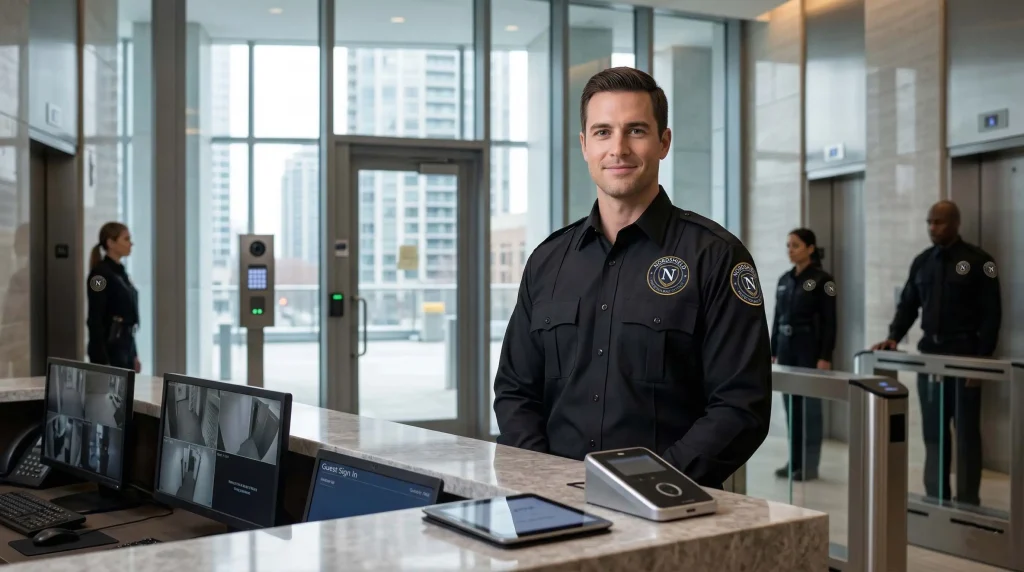
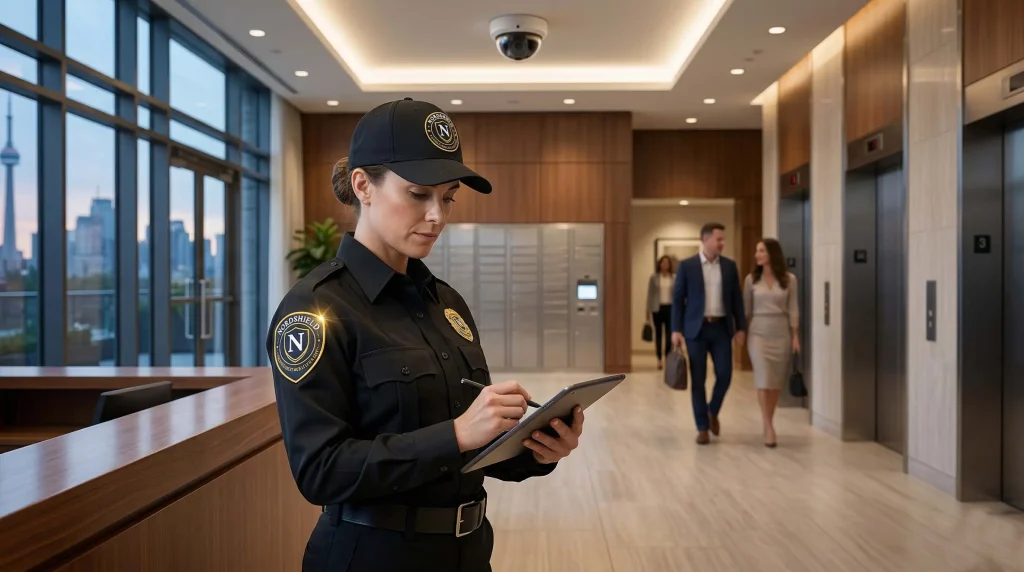
A uniformed security officer in a condo focuses on access control, patrol, incident response, and visible deterrence. Their primary role is safety. A concierge security officer blends resident services with security functions. They manage visitor access, handle deliveries, assist residents, and monitor the building, all from the front desk.
Both roles matter, but they serve different purposes. Many luxury and high-rise buildings use both: a concierge officer at the front desk and patrol officers covering the rest of the building. For smaller properties, a well-trained concierge security officer can serve both functions effectively.
On-site security personnel provide something that technology cannot: human judgment. They can spot something that feels wrong before an incident happens. That instinct, combined with proper training, makes a real difference.
Mobile Patrol Security for Condominium Properties
Not every building can justify a full-time overnight security guard. Mobile patrol services offer a cost-effective alternative. A mobile patrol officer visits the property on a scheduled or random basis throughout the night, checks all access points, reviews parking areas, and files a report after each visit.
For low-rise condominium buildings and townhouse complexes, overnight mobile patrol security provides meaningful deterrence at a fraction of the cost of a full-time overnight post. NordShield Security’s patrol officers are PSISA-licensed and trained in residential building protocols.
Lobby Security Management and Visitor Management Systems
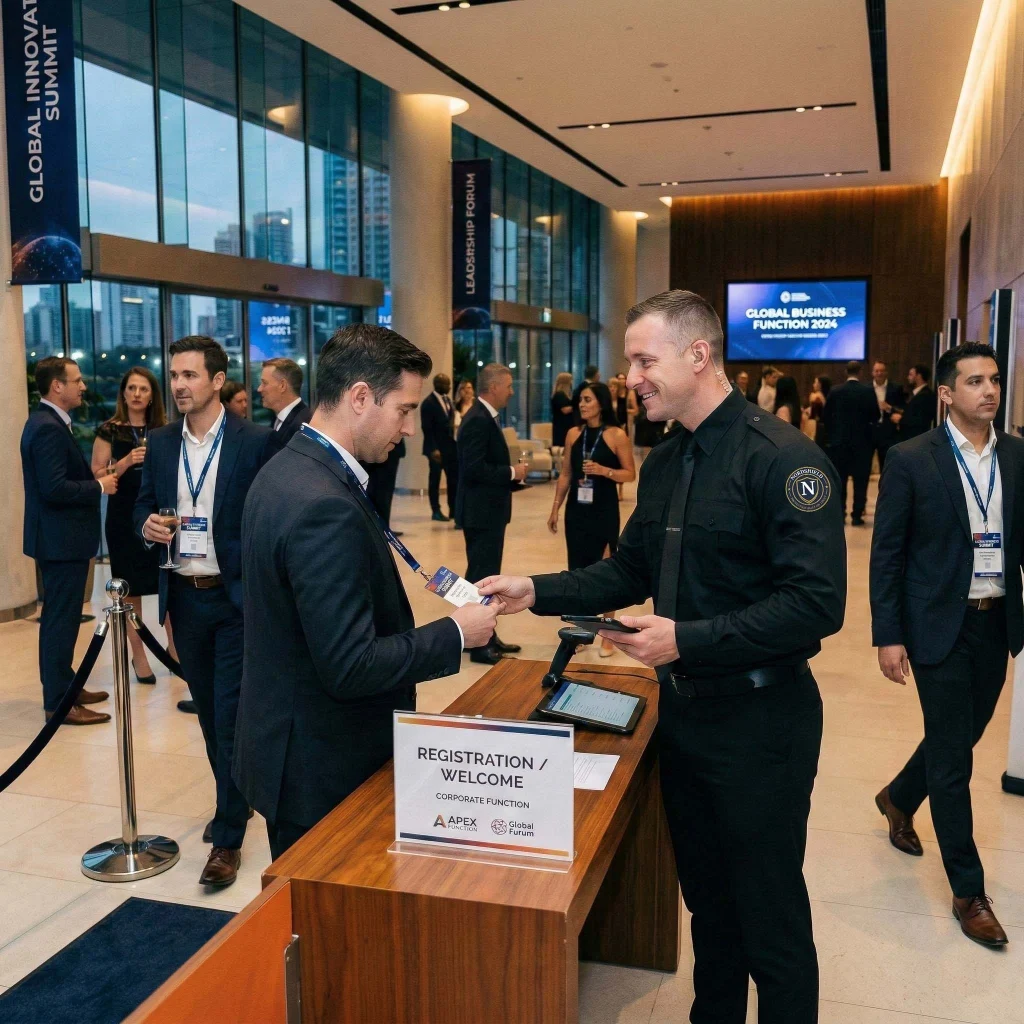
Lobby security management controls who enters the building and creates a record of every visit. Combined with a formal visitor management system, it ensures that residents, authorized guests, and service providers all go through a consistent check-in process.
A video intercom entry system lets residents screen visitors from their unit before granting access. This removes the need for the front desk to make judgment calls on every visitor and puts control in the hands of the resident. For buildings without full-time concierge staff, a managed video intercom system provides 24-hour access control without a 24-hour staffing cost.
Armed vs. Unarmed Security Guards – Which Does a Condo Building Need?
The answer for most residential buildings is unarmed. Security guard duties in a residential environment focus on access control, patrol, de-escalation, and reporting. Armed guards are appropriate for high-risk environments, and most condo properties do not meet that threshold.
What matters more than armed status is training quality, communication skills, and familiarity with residential building protocols. A well-trained unarmed security officer handles the vast majority of condo security situations professionally and effectively.
Condominium Security Solutions: Technology That Protects Your Building 24/7
The best condominium security solutions combine trained people with smart technology. Neither works as well without the other. Technology extends coverage and creates records. People make decisions and respond to situations in real time.
Here are the core technology solutions that NordShield Security recommends and installs for Ontario condominium buildings.
CCTV Surveillance Systems – Placement, Coverage, and Remote Monitoring
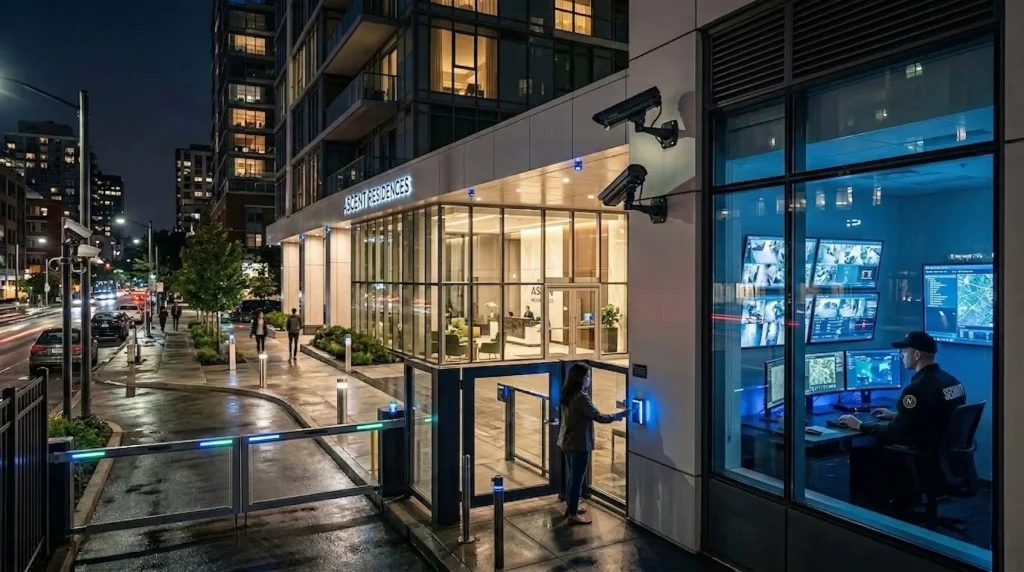
A CCTV surveillance system in a condo is only as good as its camera placement strategy. Entry and exit points, parking garages, elevator lobbies, mail rooms, and amenity spaces all need coverage. Blind spots in parking structures and stairwells are where most incidents go unrecorded.
Remote monitoring security cameras allow a monitoring station to observe live feeds and flag incidents in real time, even when no one is physically on-site. This is particularly valuable for overnight hours when staffing levels drop. NordShield Security designs camera placement plans that eliminate coverage gaps and ensure footage quality meets evidentiary standards if needed.
Keycard and Fob Access Control – Managing Entry Points in Multi-Unit Buildings
Keycard fob access control gives your building the ability to manage exactly who can access which areas and when. Resident access can be deactivated immediately when someone moves out. Vendor and contractor access can be set to specific times and entry points. Elevator access control restricts residents to their own floor, preventing unauthorized movement through the building.
Cloud-based access control systems take this further by allowing property managers to manage permissions remotely, receive real-time alerts, and pull access logs from any device. This eliminates the need for physical key management and creates a clear audit trail for every entry event.
Video Intercom, Smart Locks, and Biometric Entry Systems
A video intercom entry system at the main entrance lets residents see and communicate with visitors before granting access. Modern systems integrate with smartphones, so residents can screen visitors from anywhere. This is one of the highest-impact, lowest-cost upgrades available for any residential building.
Smart locks for residential buildings allow keyless entry through mobile credentials, reducing the risk of lost keys and unauthorized copies. Biometric entry systems, which use fingerprint or facial recognition, provide the highest level of access security and are increasingly common in luxury condo developments. NordShield Security integrates all three depending on the building’s security tier and budget.
License Plate Recognition and Parking Garage Security
License plate recognition technology at parking garage entrances automatically logs every vehicle that enters and exits. Combined with a resident vehicle registry, the system flags unauthorized vehicles immediately. This eliminates the need for manual gate checks and creates a detailed access record for the parking structure.
Motion sensor lighting throughout the parking garage removes shadows and dark areas that attract theft and vandalism. Well-lit spaces with visible cameras change behaviour. A panic button emergency system, installed at regular intervals throughout the garage, gives residents a direct line to security or emergency services if they feel threatened.
Ontario Regulations Every Condo Board Must Know About Security
Condominium security in Ontario operates within a clear legal framework. Condo boards that ignore these regulations expose the corporation to liability, fines, and serious legal risk. Understanding the rules is not optional. It is part of responsible governance.
PSISA: Why Every Licensed Security Guard in Ontario Must Be Certified
The Private Security and Investigative Services Act (PSISA) governs all security guard services in Ontario. Under PSISA, every security guard must hold a valid licence issued by the Ministry of the Solicitor General. This requires completing approved training, passing a background check, and maintaining the licence through ongoing compliance.
Any security company operating in Ontario without PSISA-licensed guards is breaking the law. Any condo corporation that knowingly hires an unlicensed provider also faces liability. NordShield Security employs only PSISA-licensed security guards. Every officer carries their licence and can present it on request. Security company liability insurance in Ontario is also mandatory, and NordShield Security maintains full coverage on every contract.
The Condominium Act and Condo Corporation Security Responsibilities
Ontario’s Condominium Act outlines the duties of condo corporations to maintain common elements and protect the safety of residents. Condo board security responsibilities include creating and enforcing rules about access, visitor policies, and incident reporting. These rules form part of the corporation’s bylaws and are enforceable against residents and vendors alike.
The Condominium Authority of Ontario (CAO) provides guidance on dispute resolution and governance best practices. When a security incident leads to a dispute between a resident and the corporation, having documented security protocols and a professional provider like NordShield Security on record demonstrates that the board took its duty of care seriously.
Privacy Laws and Security Camera Use in Ontario Condominiums
Security cameras in Ontario condominiums must comply with provincial privacy legislation. The Personal Information Protection and Electronic Documents Act (PIPEDA) applies to how footage is stored, accessed, and shared. Buildings must post visible notices that inform residents and visitors that surveillance is in use.
Privacy camera laws in Ontario condo settings also restrict where cameras can be placed. Cameras must not capture interior residential spaces or areas where residents have a reasonable expectation of privacy. Common areas, parking structures, and building entries are generally acceptable locations.
The Ontario Human Rights Code also applies to how security personnel interact with residents and visitors. Security incident reporting in Ontario must follow consistent, documented procedures that do not single out individuals based on race, gender, or other protected characteristics. NordShield Security trains all officers on Human Rights Code compliance as part of their onboarding.
How to Choose the Right Condominium Security Company in Ontario
Choosing the wrong security company creates more problems than it solves. A poorly trained guard, an unlicensed operator, or a provider without residential experience can expose your building to incidents, complaints, and legal liability.
When you hire a condo security company in Ontario, you are entering a long-term partnership. Here is how to evaluate your options and find the best security company for condos in your area.
5 Questions to Ask Before Signing a Security Contract
Before any condo corporation signs a security contract, ask these five questions:
- Are all of your guards PSISA-licensed, and can you provide copies of their licences on request?
- What does your security guard screening and background check process include?
- Do your officers hold first aid and CPR certification?
- What is your response protocol for after-hours incidents, and how quickly can you escalate to emergency services?
- What reporting and documentation do you provide after each shift or incident?
A professional provider answers all five questions without hesitation. Any vague or evasive answers are a red flag. A security contract for a condo corporation should include clear service level agreements, escalation protocols, and performance review clauses.
What a Professional Security Assessment Covers for Residential Buildings
A security assessment for a residential property reviews every aspect of your building’s current security posture. NordShield Security conducts on-site assessments that cover entry and exit point vulnerabilities, surveillance coverage gaps, access control weaknesses, lighting deficiencies, and current guard post effectiveness.
The result is a written report with prioritized recommendations. Some recommendations are zero-cost procedural changes. Others involve a targeted security upgrade for your condo building, such as adding cameras to the parking structure or upgrading from key-based entry to a cloud-based access control system.
A proper assessment is the foundation of a smart security plan. Outsourced condo security services from NordShield Security always begin with this step, so you invest in solutions that address your actual vulnerabilities rather than generic coverage.
Red Flags to Watch Out for When Hiring a Security Vendor
Watch out for these warning signs when evaluating a security vendor for your property:
- No proof of PSISA-compliant security guards or an unwillingness to provide licence numbers
- Unusually low pricing that cannot support proper training, licensing, and benefits for officers
- No residential building experience and a portfolio focused entirely on retail or commercial sites
- No clear escalation process for major incidents
- No written reporting structure or shift documentation
The cheapest option is almost never the right option in security. When incidents happen in a building with substandard security, the cost to the corporation, in liability, reputation, and resident turnover, far exceeds any savings on the monthly security contract.
Security Considerations for Specific Condominium Types
Different property types come with different security profiles. A one-size-fits-all approach ignores the real differences between a 40-storey downtown tower and a 12-unit townhouse complex. Here is how security needs shift depending on your building type.
Luxury and New Condo Developments – Elevated Security Expectations
Luxury condo security management goes beyond basic safety. Residents in premium developments expect discretion, polished professionalism, and technology-forward systems. Concierge security officers in these buildings often manage package handling, visitor pre-screening, valet coordination, and resident communication alongside their core security duties.
New condo development security has the advantage of being designed from the ground up. Smart building security technology, including integrated access control, remote monitoring, and automated parking systems, can be built into the structure before residents move in. NordShield Security works with developers and property managers at the pre-construction phase to ensure the security infrastructure matches the building’s long-term needs.
Mixed-Use and Strata Buildings – Balancing Commercial and Residential Security
Mixed-use building security presents a unique challenge. When a building contains both residential units and commercial tenants, such as retail shops, restaurants, or offices, the security team must manage different access schedules, different visitor patterns, and different risk profiles within the same property.
Strata security services for these properties require a clear separation of access zones, with commercial and residential areas controlled independently. NordShield Security designs access control plans and staffing schedules that protect both uses without creating friction for residents or commercial tenants.
Frequently Asked Questions
Do condo security guards need a PSISA licence in Ontario?
Yes. Under the Private Security and Investigative Services Act (PSISA), all security guards working in Ontario must hold a valid provincial licence. This includes guards posted at condominium buildings, regardless of whether they work for an independent security company or are hired directly by the condo corporation. Hiring unlicensed guards exposes the condo corporation to legal liability. Always verify that your security provider employs only PSISA-licensed personnel.
What is the difference between a concierge and a security officer in a condo?
A concierge security officer combines resident services, such as managing deliveries, screening visitors, and assisting residents, with core security responsibilities like monitoring cameras and controlling access. A dedicated security officer focuses entirely on safety, patrol, and incident response. Many buildings use both roles. The right choice depends on your building size, resident expectations, and security risk level.
Can a condo board install security cameras in common areas?
Yes, condo boards in Ontario can install security cameras in common areas such as lobbies, hallways, parking garages, and building entrances. However, boards must comply with provincial privacy legislation. This includes posting visible notices that cameras are in use, storing footage securely, and limiting access to authorized personnel. Cameras must not capture interior private spaces or areas where residents have a reasonable expectation of privacy.
How much do condominium security services cost in Ontario?
Costs vary depending on the type and scope of services. A full-time on-site security officer typically costs between $18 and $28 per hour in Ontario, depending on the level of training, certifications, and shift timing. Mobile patrol services cost significantly less per visit. Technology solutions like access control systems and CCTV installations involve upfront hardware and installation costs plus ongoing monitoring fees. NordShield Security provides detailed, customized quotes based on your building’s size, risk level, and service requirements.
What should a condo security company’s contract include?
A strong security contract for a condo corporation should include a clear description of services, scheduled hours and post locations, reporting and documentation requirements, response time guarantees for incidents, escalation procedures, proof of liability insurance and PSISA compliance, and performance review terms. Avoid contracts that lack measurable service standards or that exclude liability for incidents during covered hours.
Build a Safer Condominium Community Starting Today
Condominium security is not a luxury. It is a responsibility that every condo board, property manager, and building owner in Ontario carries for the people who call their building home.
The good news is that protecting your building does not require a massive budget. It requires the right plan, the right people, and the right technology working together. Whether you manage a luxury high-rise in Toronto, a mid-size condo in Mississauga, or a townhouse complex in Ottawa, there is a security solution that fits your building and your budget.
NordShield Security provides professional condominium security services across Ontario. Our team includes PSISA-licensed security officers, certified concierge security staff, and technology specialists who design and install access control and surveillance systems built for residential properties. We work with condo corporations, property managers, and developers to create security programs that residents actually feel.
Ready to improve condominium security at your Ontario building? Contact NordShield Security today to schedule a free residential security assessment. Our team will review your property, identify the gaps, and recommend a practical plan that protects your residents and your investment.
Get in Touch
- 416-771-2471
- info@nordshield.ca
- 27-2355 Derry Rd. E Mississauga, ON L5S-1V6